ServicesWindow Retrofitting
Window Retrofitting in Carson
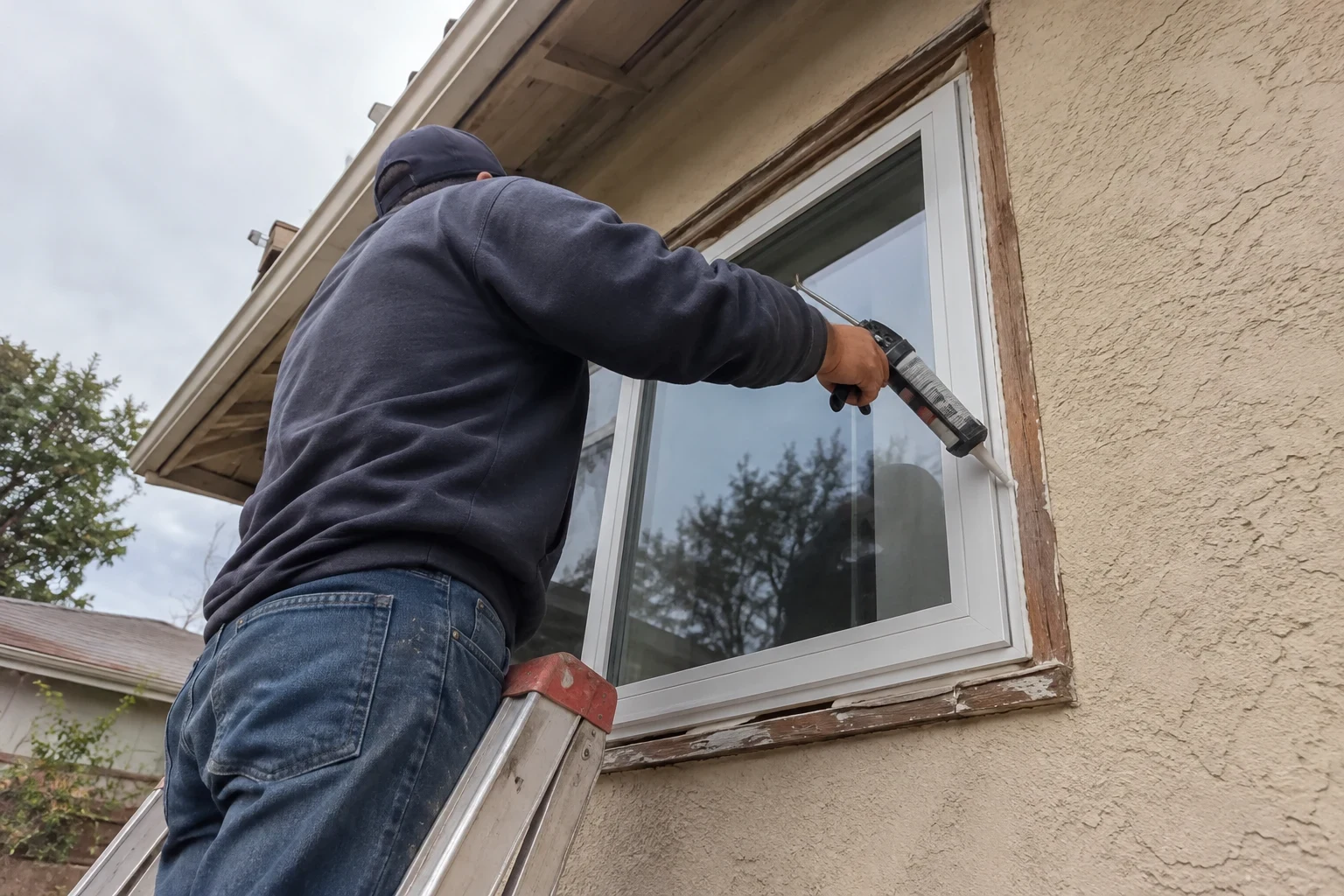
We take out the old sashes and glass, check the frame that stays in the wall, and set a new window into it. Your stucco and inside trim stay put. You get a plain answer on whether retrofit fits your home before anything is ordered.
What a retrofit is, and when it fits
Most homes around Carson have aluminum windows set into stucco walls. A retrofit window, sometimes called an insert, is built to fit inside that old frame. We pull the sliding panels and fixed glass, clean up the frame left in the wall, and fasten the new unit in place. A flange on the outside covers the old edge, so you see a clean new window and no patched stucco.
It is the right call when the old frame is straight, solid and sealed to the wall. It is the wrong call when the frame is bent, a wood sill has gone soft, or water has been getting in behind the stucco. That is why we look before we recommend anything.
If retrofit is not a good fit for an opening, we tell you why and explain what full-frame window replacement would involve instead. Some homes end up with a mix, and that is fine.
What the work includes
Frame check at every opening
We check each old frame for square, look for bent tracks, corroded corners and soft wood, and note any staining under the sill. You get the findings in plain words, window by window.
Measured to build
Retrofit windows are made to size. We measure each opening in several spots and order to the tightest reading so the new unit sits square without forcing it.
Removal without tear-out
Sashes, fixed panels and loose track pieces come out. The outer frame stays in the wall, so there is no cutting into stucco or interior drywall.
Setting and sealing
The new window is shimmed level and plumb, fastened through the old frame, and sealed at the exterior flange. Gaps on the inside are filled with insulation and finished with trim.
Cleanup and walkthrough
We haul off the old glass and aluminum and vacuum the work areas. Then we open, close and lock every new window with you before we leave.
Signs your windows are ready for a retrofit
Sliders that fight you
Worn rollers and bent tracks make panels stick or jump off. When the track itself is chewed up, a new window is the lasting answer.
Fog between the panes
Cloudy glass in a dual-pane window means the seal has failed. The insulating gas is gone and it will not clear up.
Drafts and dust at the sill
Dried-out weatherstripping and clogged weep holes let in air, dust and traffic noise. You feel it most on windy days.
Single-pane glass
One layer of glass lets summer heat straight in and keeps rooms cold on winter nights. Our Energy Efficient Windows page covers glass options in more detail.
Wet, dark frames on cold mornings
Old aluminum frames carry cold right through. Condensation collects on them, and black spots show up on the sill and nearby paint.
How a retrofit job runs
- 1
Your call and visit
You call and we set a time for a free in-home estimate. There is no sales pressure and no obligation.
- 2
Inspection and plain findings
We walk every window with you, show you what we see, and point out any opening that should not be a retrofit. You get a written estimate, line by line.
- 3
Ordering your windows
Once you sign off, we order units built to the measurements we took. We tell you the expected lead time when the order goes in.
- 4
Install day
Drop cloths go down inside and out. We work one opening at a time, so your home is not left with a row of open holes, and each window is sealed before we move on.
- 5
Final check
We test every window, clean up, and go over care basics like keeping tracks and weep holes clear.
What moves the price of a retrofit
A retrofit usually costs less than full-frame work because the wall is not opened up. The final number depends on what we find at your home and what you choose. Your estimate lists each opening on its own line, so nothing shows up later. We'll beat any estimate from another licensed contractor or USA-made window supplier.
- Number and size of openings
- More windows and larger units mean more material and time. A big picture window costs more than a small bathroom slider.
- Window style and glass
- Sliders, single-hung and fixed units price differently. Low-E coatings, obscure glass for bathrooms, and tempered glass where code calls for it all change the total.
- Frame condition
- Sound frames go fast. An opening that needs extra prep, or one that has to switch to full-frame replacement, adds labor.
- Access and permits
- Second-story windows, tight side yards and security bars take more time. Where the city requires a permit, we pull it and include it in the estimate.
Window retrofitting questions
Something not covered here? (310) 340-7107
Will you have to cut into my stucco?
Not for a retrofit. The old frame stays in the wall and the new window's flange covers the edge on the outside. If an opening needs the frame removed, we tell you at the inspection, before anything is ordered.
Does a retrofit make my glass area smaller?
A little. The new frame sits inside the old one, so you lose a small strip of glass around the edge. Most people do not notice once the window is in, but we can show you on a sample during the visit.
My windows have wood frames. Can they be retrofitted?
Often, yes, if the wood is solid. We probe the sills and corners for soft spots. If the wood is rotted, a retrofit would just cover the problem, so we recommend full-frame window replacement for that opening.
How long does the install take?
It depends on how many windows you have and how they are reached. We give you an expected schedule with your estimate. Each opening is closed up before we start the next one.
What credentials do you hold for this work?
We are CSLB C-17 licensed. That is the state's glazing contractor classification, the one that covers window work like this. We are also bonded and carry $2 million in coverage.
Find out if your frames are retrofit-ready
We will check every window, tell you what we find, and give you a line-by-line price. No pressure and no obligation.